01 · The problem
At BMOI, orders to buy or sell more than 4,000 EUR of foreign currency went through paper. Client companies sent them by mail or email. They were approved with handwritten signatures, passed around by email between departments, then typed again into a Microsoft Access tool. Calculations were done by hand and reports went out by email. The result: lost files, typing errors and no history.
02 · What I did
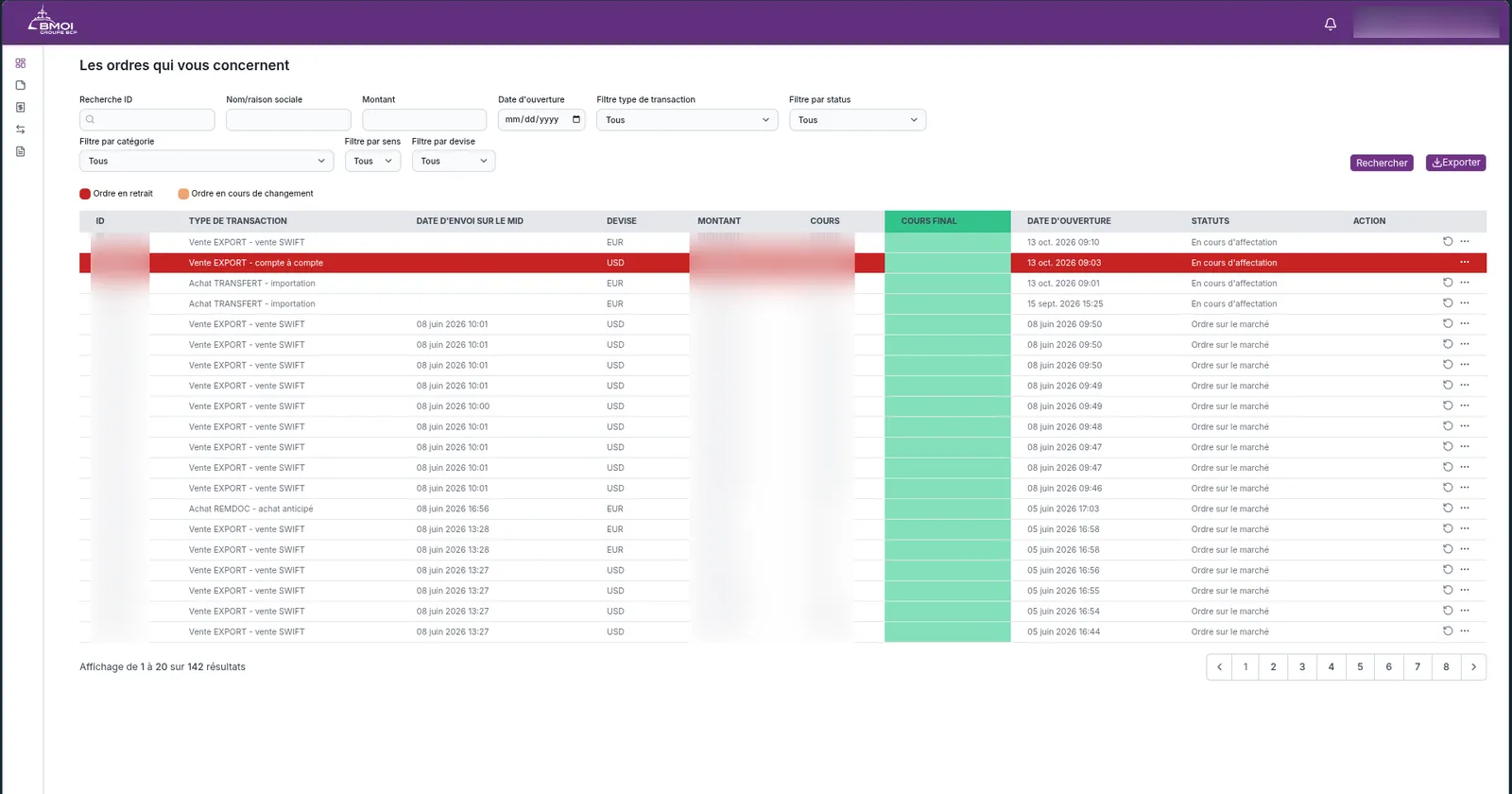
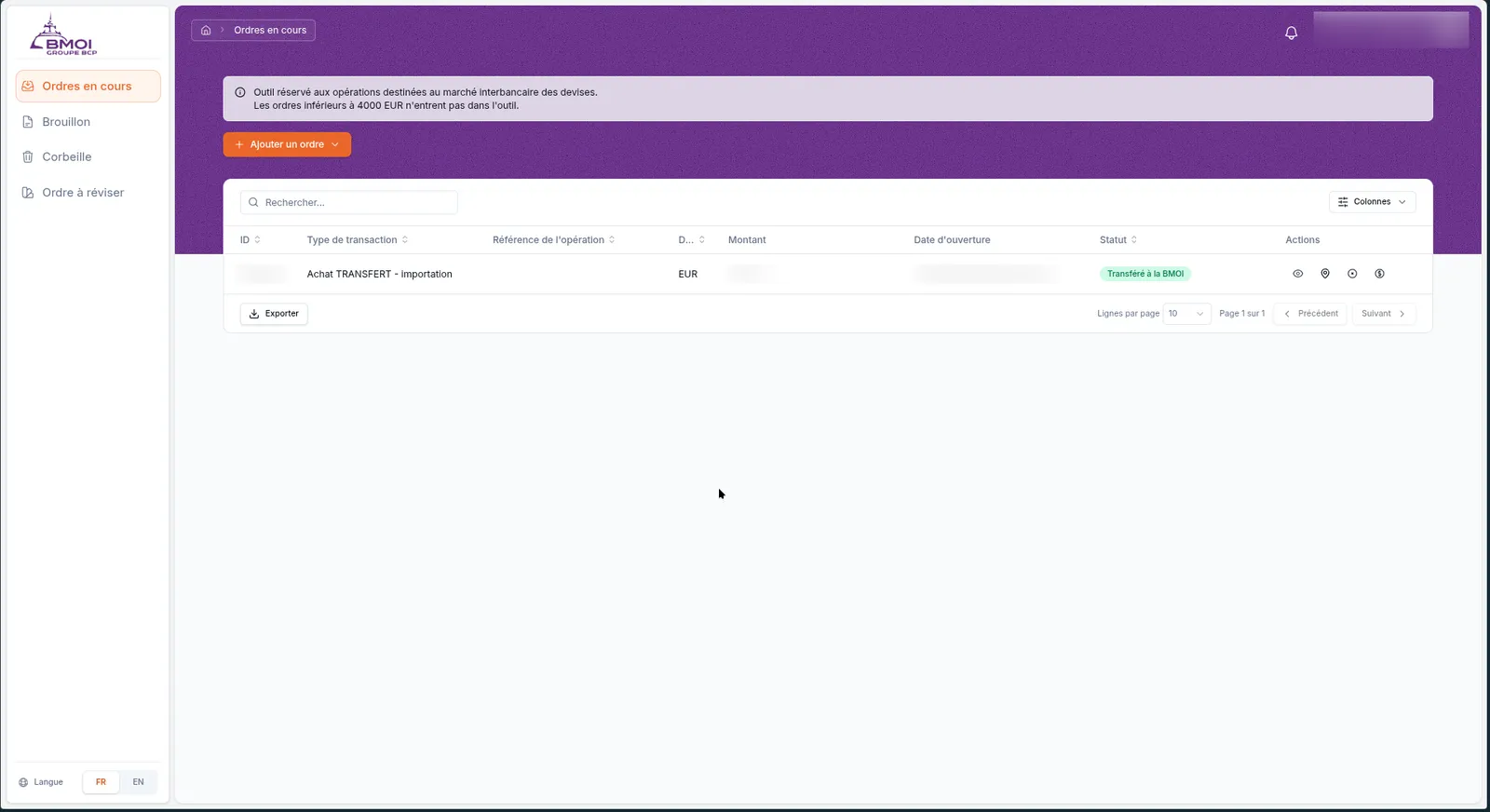
- Client side: companies fill in their orders online, attach supporting documents, approve them internally and send them to the bank. They then follow each order, change it or withdraw it.
- Bank side: an approval workflow between departments (letters of credit, import, export), the quotation desk, compliance and account managers. Every approval is logged: who, when, with what comment.
- Calculations once done by hand are now automatic.
- Notifications between departments go out on their own, by email and in real time.
- PDF and Excel exports for reporting.
03 · The hard part
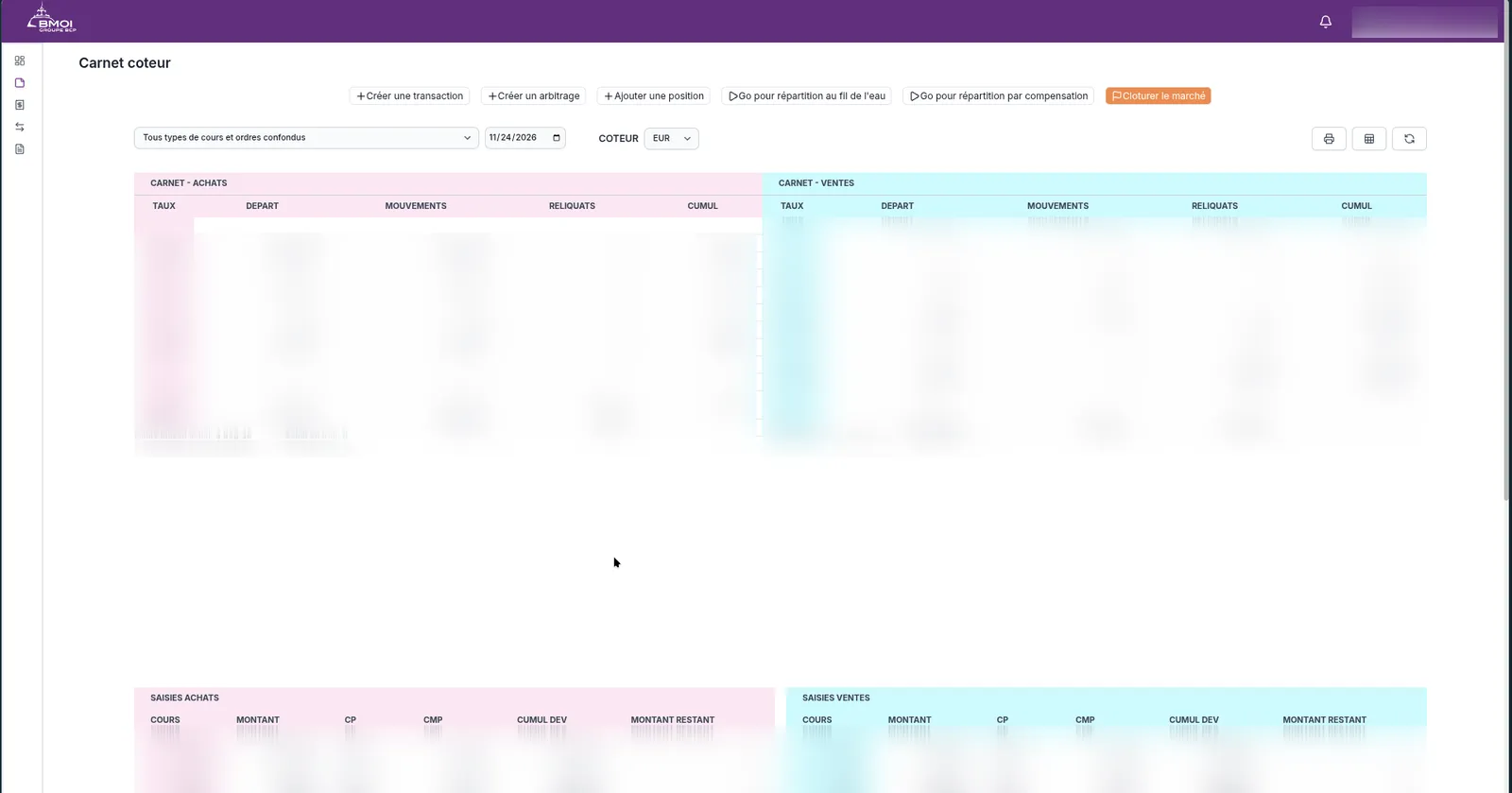
At the heart of MID is the allocation engine. Client orders have to be served from the currency available on the interbank market: transactions, arbitrages, positions. One order can be served in several tranches, and each tranche goes through its own final-rate approval.
I made sure an order's status is never set by hand: it is computed from all its tranches. The least advanced tranche wins, and a disagreement blocks the order. The status shown is always right.
04 · The result
Both applications are in production. More than 100 client companies and the bank's departments use them instead of the Access tool and the paper workflow.
Stack
- Laravel
- React
- TypeScript
- PostgreSQL
- Laravel Reverb
- Docker
Internal application: no public link.